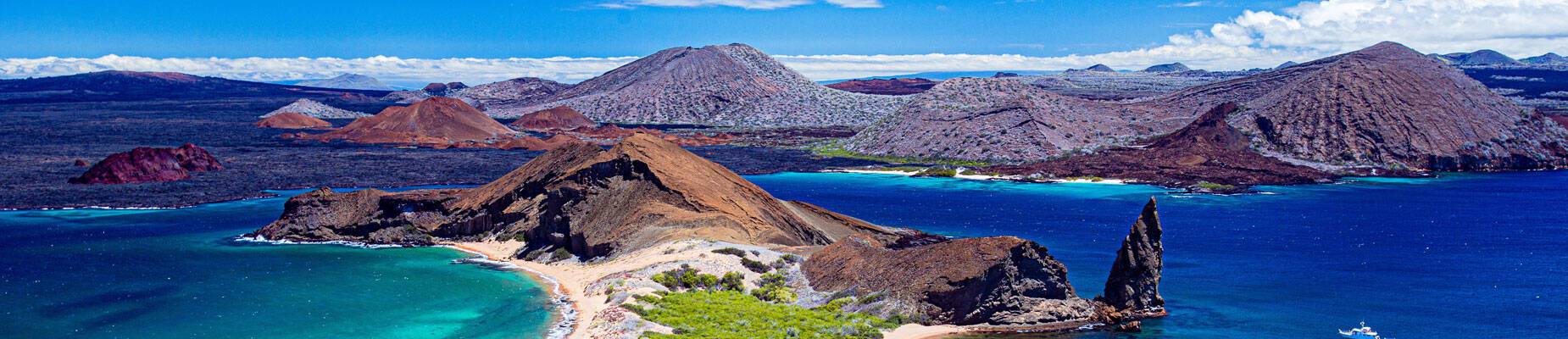
Scattered across the Pacific Ocean off the western coast of South America, a voyage to the Galápagos Islands sits high on many travellers’ bucket lists. The entire archipelago is a UNESCO World Heritage Site, making it a dream destination for nature enthusiasts and wildlife lovers alike. Whilst it's a popular destination year-round, what you see can vary depending on when you visit. Here, we’ve put together a month-by-month travel guide to help you choose the best time to cruise to the Galápagos Islands and ensure you get the most out of your trip.
When is the best time to cruise to the Galápagos Islands
The best time to cruise to the Galápagos Islands largely depends on what you’re hoping to see when you arrive. With an incredible diversity of wildlife and landscapes, it’s a destination that can be enjoyed year-round. The seasons generally fall into two categories: wet and warm, and cool and dry. The warm, wet season is especially appealing for beach lovers, swimmers and snorkellers, thanks to higher temperatures and calmer waters. It’s also a great time to watch land bird courtship displays and see sea turtle nesting, too. Meanwhile, the cool, dry season is perfect for spotting larger marine life, with nutrient-rich waters attracting a variety of species.
Cruise calendar: Galápagos Islands
The Galápagos Islands in January
January marks the beginning of the warm, wet season across the Galápagos Islands. You can expect plenty of sunshine, with temperatures reaching around 31-32°C. There are occasional tropical showers, but these are typically short-lived, leaving behind warm, humid conditions. It’s an excellent time to enjoy the beaches, snorkel through turquoise waters and spot an abundance of wildlife. During this month, giant tortoise eggs begin to hatch, while green sea turtles come ashore to dig nests and lay their eggs. Land birds, including Darwin’s finches, tend to start nesting during this time, once the first rains have fallen. Meanwhile, the waved albatross colony has usually left the islands by now in search of richer fishing grounds. Increased rainfall transforms the landscape, turning typically arid terrain into lush, green scenery.
The Galápagos Islands in February
The warm and wet season continues into February, bringing similar conditions to January. Temperatures remain high, with intermittent showers and elevated humidity. Wildlife activity is particularly rich during this time. On Santa Cruz, marine iguanas begin nesting, digging burrows in preparation for laying eggs. At Cormorant Point on Floreana Island, flamingos start constructing their distinctive cone-shaped nests. Visitors should be careful not to disturb these sites, as flamingos are highly sensitive and may abandon their nests if disrupted. Elsewhere, red-footed boobies on Genovesa Island tend to their nests, while flightless cormorant chicks are raised along the shores of Fernandina Island. The islands’ flora also begins to flourish, adding vibrant colour to the landscapes.
The Galápagos Islands in March
March is typically one of the hottest and wettest months in the Galápagos, with temperatures reaching highs of 33°C. You’ll likely experience high humidity, sunny spells and occasional tropical rain showers. The sustained rainfall over the past months means the islands are at their greenest, with lush vegetation covering the landscape. These conditions are perfect for land-based species such as giant tortoises, land iguanas, and Darwin finches, which are particularly active during this time. The contrast between vivid greenery and the islands’ dramatic volcanic terrain makes March an especially striking time to visit.
The Galápagos Islands in April
Warm, wet conditions continue into April, with temperatures averaging around 30-31°C and ever-so-slightly decreasing rainfall. It’s one of the most popular months to visit, thanks to calmer seas and excellent visibility for snorkelling. April also marks the return of the waved albatross to Española Island, where they begin their courtship rituals. These lifelong pairs reunite through elaborate displays after months spent at sea. Green sea turtle hatchlings can often be seen emerging on beaches, while frigatebirds and Galápagos hawks soar overhead. The lowlands remain lush and green, while the highlands are often misty and atmospheric.
The Galápagos Islands in May
May is a transitional month, marking the end of the wet and warm season and the gradual onset of the cooler, drier season. Temperatures begin to drop to around 26-27°C, and rainfall decreases. This is a prime time to see the majestic waved albatross nesting on Espanola Island, the only place in the world where they breed. Along the shores, sea turtle hatchlings continue their journey from their nests to the sea, navigating past predators such as frigate birds and hawks. The islands begin to dry out in places, creating a striking contrast between dark lava landscapes and lingering coastal greenery.
The Galápagos Islands in June
June marks the start of the cool and dry season. Temperatures average around 25-26°C, and humidity drops, making conditions feel more comfortable despite cloudier skies. The arrival of the Humboldt Current brings cooler, nutrient-rich waters that attract a wide variety of marine life, making it ideal for snorkelling and diving. This is also the beginning of the whale-watching season. On Fernandina Island, Galápagos penguins and flightless cormorants begin their breeding cycles. While the lowlands start to dry, the highlands remain green and mist-covered.
The Galápagos Islands in July
July continues the cool, dry conditions, with temperatures hovering around 25-26°C. Seas become more active, but nutrient levels remain high, supporting abundant marine life. This is an excellent time to spot whales and dolphins, as well as large schools of fish. Divers may also encounter whale sharks, particularly around Darwin and Wolf Islands. Waved albatross chicks begin to hatch on Espanola, relying on their parents for food during the early stages of life.
The Galápagos Islands in August
August sits firmly within the cool and dry season, bringing overcast skies, lower humidity, and cooler temperatures that sit around 24-25°C. Marine life is especially active, with increased chances of spotting hammerhead sharks and migratory whales. Sea lion activity is also high, with pups commonly seen along the shores. Flamingos remain present in lagoons, particularly on islands like Floreana.
The Galápagos Islands in September
Conditions remain similar in September, with cool temperatures and minimal rainfall. It’s one of the best months for marine wildlife encounters. Galápagos penguins begin their breeding season, and sea lion pups are abundant, often seen playing in shallow waters under the watchful eye of their mothers. Whale shark sightings are at their peak, particularly in the northern islands, making this a standout month for divers.
The Galápagos Islands in October
October continues the cool and dry trend, with temperatures around 24-25°C. Marine conditions remain excellent for wildlife viewing, too. Blue-footed boobies are actively raising their young, and flamingos can still be seen nesting in certain lagoons during this time.
The Galápagos Islands in November
November signals the transition towards the wetter and warmer season. Temperatures remain mild, and rainfall is still relatively low. Sea lions are typically highly visible and increasingly active in the water, often learning to swim. These playful creatures are adorable to observe, but it’s important to remain a respectful distance and not to get too close, as their mothers are extremely protective. Landscapes remain a mix of dry coastal zones and lush, misty highlands.
The Galápagos Islands in December
December marks the shift back to the warm, wet season. Conditions become more changeable, with increasing sunshine, warmer temperatures, and occasional rainfall. Bird activity intensifies as species such as Darwin’s finches begin nesting. Green sea turtles and marine iguanas also enter their breeding periods. As rainfall increases, the islands begin to green once again, and calmer seas return, setting the stage for the new season.