Call us FREE 0808 2394 989
Opening Hours - Office open, we'll close at 8:00pm
A guide to Iceland’s UNESCO World Heritage sites
Published on 09 Oct 2026
Few destinations showcase the raw power of nature quite like Iceland. Thanks to the striking contrast between active volcanoes and towering glaciers, the majestic country is best known as the ‘land of fire and ice’. Whilst its dramatic landscapes and extraordinary natural wonders are undoubtedly part of Iceland’s allure, there is much more to discover. A fascinating Viking past and centuries-old traditions have also helped shape the country into what it is today. Today, Iceland is home to three remarkable UNESCO World Heritage Sites, each recognised for its cultural or natural significance:
Date of inscription: 2004
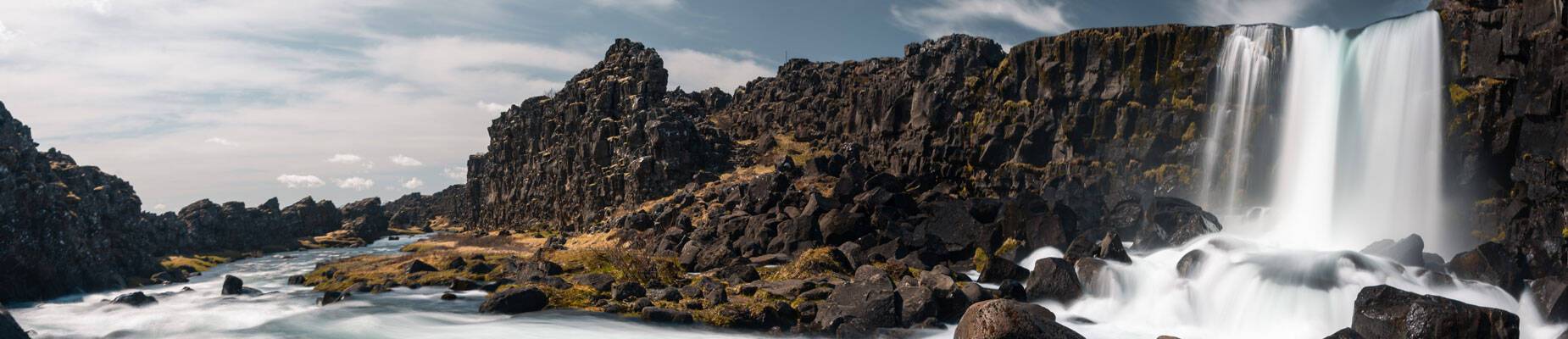
For a true insight into Iceland’s history and extraordinary geology, Þingvellir National Park is a fantastic place to start. Situated around 49 kilometres east of Reykjavík, this spectacular landscape is characterised by dramatic cliffs, lava fields and the waters of Iceland’s largest lake, Þingvallavatn. This location earned its status as a UNESCO World Heritage Site in 2004 due to its remarkable historical significance. It was once the Althing, an open-air assembly where representatives gathered to make laws and settle disputes. The assembly was held here from 930 to 1798, creating a lasting connection between Þingvellir and Iceland's development. Remnants of around 50 booths constructed from turf and stone can still be found across the landscape, while archaeological remains dating as far back as the 10th century are thought to be beneath the ground. The national park also sits within an active volcanic and tectonic landscape, where the North American and Eurasian tectonic plates are gradually pulling apart. The resulting rift valley has created some of the park’s most dramatic scenery, making Þingvellir a popular spot to visit not only for its remarkable beauty but also for its fascinating history.
Date of inscription: 2008
Located approximately 32 kilometres off the country’s south coast, Surtsey is a spectacular volcanic island which didn’t exist until the 1960s. In 1963, an underwater volcanic eruption began and continued until 1967, creating an entirely new island in the North Atlantic. Surtsey has been closed to the public since its formation, allowing it to serve as an invaluable natural laboratory. Only a small number of scientists have been granted access, giving them the rare opportunity to observe how life gradually establishes itself on previously barren land. Seeds arrived via ocean currents, followed by moulds, bacteria, and fungi, while plants, birds, and invertebrates have since made the island their home. This ongoing process allows scientists to study how a new ecosystem develops naturally over time. Surtesy’s UNESCO World Heritage status celebrates something quite different from a traditional visitor attraction. Rather than preserving a historic landmark or cultural site, it recognises the extraordinary scientific value of a landscape that has been allowed to evolve with as little human intervention as possible.
Date of inscription: 2019
If there’s one place that encapsulates Iceland’s reputation as the land of fire and ice, it's Vatnajökull National Park. Covering more than 1.4 million hectares, this immense protected landscape encompasses around 14% of Iceland and is centred around the vast Vatnajökull ice cap. Surrounding it is an extraordinary active volcanic landscape, creating a fascinating relationship between glaciers and fire. Recognised as a UNESCO World Heritage Site for its unique and dynamic geological processes, the national park contains ten central volcanoes, eight of which lie beneath glaciers, and when these powerful forces come together, the results can be dramatic. Volcanic eruptions beneath the ice can melt vast quantities of glacial ice, sometimes triggering sudden floods known as jökulhlaups and continually reshaping the surrounding landscape.