I can honestly say that nothing prepared me for the welcome committee waiting for us in Salisbury Plain. No, not that one, but its namesake in South Georgia. The remote British island in the Southern Ocean, where the explorer Sir Ernest Shackleton sought help in 1916 when his ship became trapped in ice and sank in Antarctica.
There are king penguins everywhere, covering the beach and shore as far as the eye can see. They’re not just on land either. Before going ashore, I’ve been watching them porpoise in and out of the sea. There are also hundreds of fur seals; above us, snowy sheathbills are flapping around, scavenging for bits of regurgitated krill that the penguins have dropped while feeding their chicks.
All this in just one morning, in just one cove. Wow. I’d say it was the highlight of my epic 23-day voyage through the Southern Ocean on HX’s expedition ship, MS Fram, except every day was as amazing. A different landing spot, a different tableau to meet us as we went ashore in the Falkland Islands, South Georgia and Antarctica; each day as magical as the one before.
Three days after setting sail from Punta Arenas in Chile, MS Fram arrived at West Point Island, and we set off in search of rockhopper penguins. I’d waited 13 years to see them, so what a moment! They were so close, so adorable. Only 33cm or so tall and with yellow and black spiky feathers on their heads, they really do hop, usually on rocks, hence their name. As a bonus, they were sharing their nesting ground with hundreds of black-browed albatross, so we got close to them, too. It was so worth the 40-minute hike to see them (Land Rovers were on hand for those who needed a lift).
MS Fram went alongside in Stanley the next day, but otherwise all landings on this cruise were in inflatable Zodiacs, stepping ashore on beaches or rocks. Waterproof trousers and stout boots (the latter provided by HX) are mandatory. You also need clothes that can be layered up because it might be summer when the ships are down in the Southern Ocean, but it’s pretty chilly.
Temperatures ranged from 9 °C in the Falklands to minus 2 °C in Antarctica, and the weather could change within seconds. In just one hour in Stanley, it went from warm sun and blue skies to hail, rain, and snow. Everyone was buried in gloves, scarves, woolly hats, thermal gear and warm jackets, all topped by an HX wind and waterproof jacket that’s yours to take home.
The islands are about 750 nautical miles from South Georgia - two days at sea, if that’s easier to envisage - during which time the expedition team, a 14-strong band of experts in everything from whales and penguins to ice and history, was on wildlife watch with us on the open deck, giving lectures or hosting Citizen Science activities looking at clouds.
They also took those interested out on science boats to learn more about the ocean and what was going on below the waves. It was fascinating, but I confess it reminded me of why I never got very far with science at school.
The science boat is complimentary, but there are a few optional activities available that cost extra, including hiking, kayaking, snowshoeing and camping ashore for one night. The good news is that the polar plunge is free. And very cold!
Those two sea days en route to South Georgia were also the time to hear the do’s and don’ts about going ashore there and in Antarctica from Tomski, our expedition team leader. We were to keep at least five metres from wildlife and avoid taking pebbles as souvenirs (people really do, he told me). In 2005, the South Georgia Heritage Trust was set up to preserve the island’s unique ecosystem. HX works hard with its passengers to help them with this.
I’d heard that South Georgia was spectacular, and it didn’t disappoint. The scenery is stunning, with jagged snow-capped mountains and sheer cliffs, and the wildlife numbers are mind-boggling. One million pairs of macaroni penguins, five million fur seals, 40,000 elephant seals. There were so many on the beach in Gold Harbour that we had to stand in the surf and watch them. I could have stayed for hours. And then there is the history. Not just Shackleton’s heroic exploits and his grave in Grytviken, but also other polar explorers and the whale industry.
After four days in South Georgia, it was time to move on. The plan was to land in South Orkney on the way to Antarctica, but as Tomski had warned at the start, things don’t always go to plan on an expedition cruise, as we are at the mercy of wind, waves, and ice. We started the cruise on Plan A; by the time we returned to Punta Arenas, we were on Plan G. ‘Actually, that’s pretty good,’ Tomski reassured us.
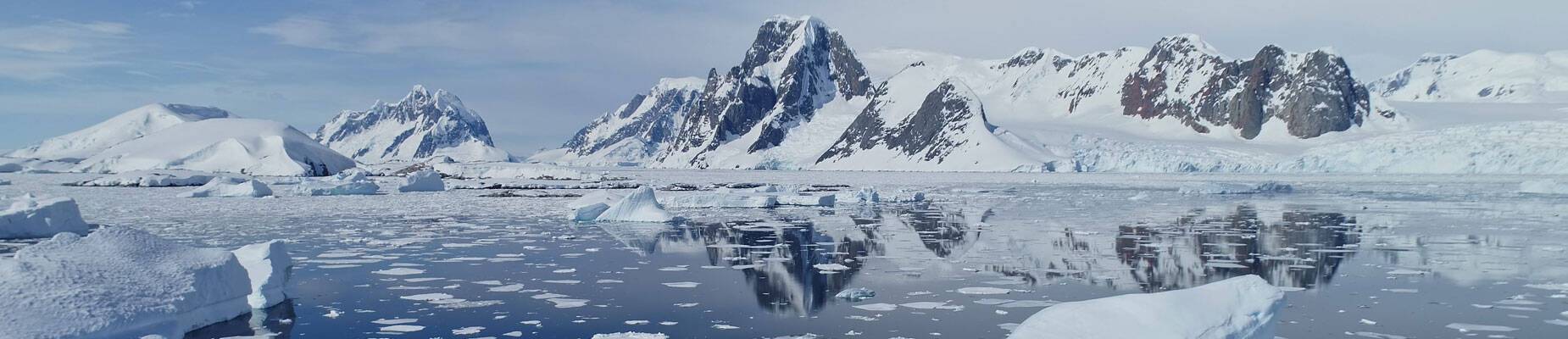
This was my fourth cruise in Antarctica, and it was wonderful to feel part of the spectacular, majestic snow-capped mountains and snowy landscapes again. As it was late November - spring rather than summer - the penguins were starting to build their nests (go later if you want to see chicks).
It was also my third cruise on MS Fram, a lovely ship named after the vessel used by the Norwegian explorer Roald Amundsen, which was built for polar exploration. It’s small (no more than 200 passengers), super friendly, and has a charming and attentive crew. It’s gained a Science Centre since I was last on and is looking very trim after a recent refurbishment. Cabins are cosy, so my top tip is to bag a suite as they are spacious and come with free laundry and access to a private restaurant, Lindstrom.
Put all that together with ROL Cruises’ expertise and HX’s excellent organisation, whether it be the flights, transfers, hotels, or every day on board, and you have a voyage that’s hard to beat.
Our last landing in Antarctica was Brown’s Station, an Argentinean base, but as we left that afternoon, three humpback whales appeared, feeding, breaching, and diving. We followed them for about 30 minutes, then they headed off, and our captain set a course for the Drake Passage. It was a magical end to an epic adventure, and I am sure we would all repeat it in a heartbeat.