Frequently cited as one of the world’s happiest cities, Denmark’s vibrant capital is most famous for its beautiful architecture and uber-friendly locals. Any season is a good season to explore Copenhagen, and, as one of the most cycled cities in the world, it’s easy to get around on two wheels.
On a cruise to Copenhagen, your time in the city may be brief, so we’ve taken the hard work out of planning and created three tailored itineraries for you to choose from. Each has been designed with timing and distance in mind - all you need to decide is which one suits you best.
Look out for the ⭐ symbol throughout the itineraries. These highlights have been personally recommended by ROL Cruise team member Olivia, who recently visited Copenhagen on a weekend break.
Things to do in Copenhagen
Option one
- Start your day at Nyhavn Canal ⭐
- Walk to The Little Mermaid ⭐
- See Rosenborg’s Castle
Start your day at Nyhavn Canal
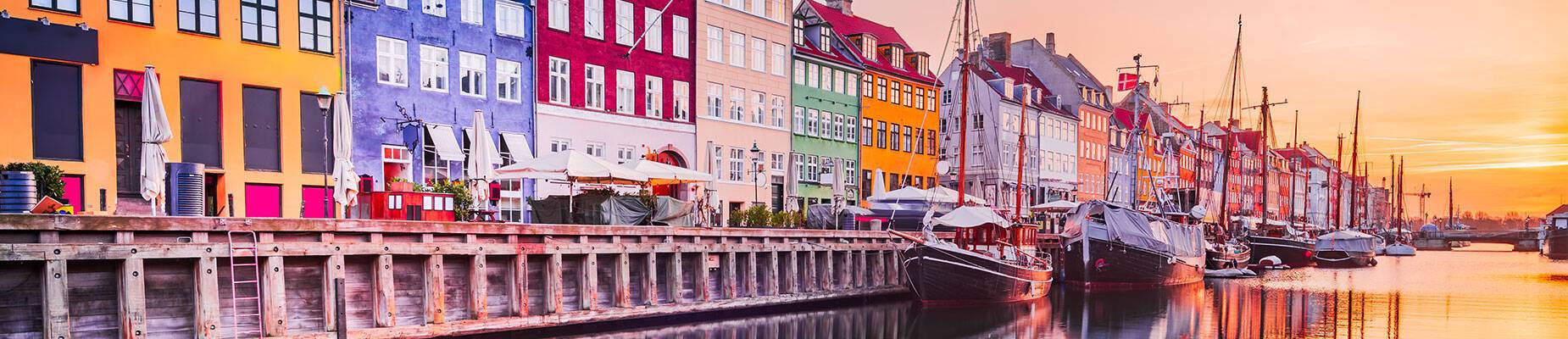
Not only is Nyhavn (pronounced “new-hown”) Canal one of Copenhagen’s most photographed spots, it is also one of its most frequently visited. In years gone by, the colourful harbour was a bustling port, acting as the transport hub for general cargo and goods. Today, the beautiful spot is one of Copenhagen’s most iconic areas with brightly painted 17th-century houses, lively cafés and cosy pubs overlooking the canal. Did you know that the Danish fairytale writer Hans Christian Andersen lived in three different houses along Nyhavn Canal?
Walk to The Little Mermaid
About 20 minutes on foot from Nyhavn Canal, you’ll find Copenhagen’s most famous sculpture, The Little Mermaid. The sculpture, inspired by Hans Christian Andersen’s timeless fairy tale, was created in 1913 by Edvard Eriksen and gifted by the Danish brewer Carl Jacobsen. Situated on Langelinie Pier, she gracefully sits on a rock in the water as a symbol of love, sacrifice, longing and transformation. You can get very close to the Little Mermaid, right up to the rock she sits on, which allows you to take in every little detail.
See Rosenborg’s Castle
Christian IV, one of the most famous Scandinavian kings, built some of Copenhagen’s most significant buildings. Among them was Rosenborg, a 17th-century Renaissance castle that soon became Christian IV’s favourite. Today, the castle houses some of Denmark’s greatest cultural treasures - over 400 years' worth, to be precise. Among the attractions are the crown jewels, the Great Hall (which houses the coronation thrones and three life-size silver lions standing guard), and tapestries commemorating battles between Denmark and Sweden. Tickets cost just under £17pp, or you can use a Copenhagen Card for free access.
Option two
- Enjoy a Stromma canal tour ⭐
- Visit Christiansborg Palace
- Spend the evening at Tivoli Gardens ⭐
Enjoy a Stromma canal tour
Explore Copenhagen from the water on an hour-long canal tour with Stromma that starts and ends at Ved Stranden. As you sail along the city’s intricate canals, a friendly onboard guide narrates your journey. You’ll learn all about the landmarks of Copenhagen, like Rosenborg Castle, Christiansborg Palace, The Little Mermaid, Christiania and Amalienborg Castle, which is home to the royal family. The boats have an open-air space at the aft with outdoor seating (great for unobscured panoramic views) or covered seating if it’s a little chilly. Tickets cost roughly £20pp.
Visit Christiansborg Palace
Another of Copenhagen’s iconic landmarks, Christiansborg Palace holds 800 years of royal history. Once a haven for kings and queens, the palace is now home to the Danish Parliament, the Supreme Court, and the Ministry of State. The Prime Minister of Denmark also uses the Royal Reception Rooms for visits with foreign state leaders. Lurking beneath the palace are a series of intricate ruins, including a wall that dates back to the Middle Ages, which can be toured as part of your ticket (prices start from £25pp). Don’t miss out on a trip around the castle’s former kitchens, too.
Spend the evening at Tivoli Gardens
Founded in 1843, Tivoli Gardens is the second-oldest amusement park in the world. But it’s more than just an amusement park. With over 30 dining options, more than 30 rides, beautiful gardens, magical live performances and much more, Tivoli Gardens is an institution of Copenhagen. In fact, it inspired Walt Disney when he visited in the 1950s and is pinned as one of Disneyland’s most significant influences. Spanning more than 20 acres, you’ll need a few hours to explore - guided tours are available during select times of the year, while self-guided audio tours are available year-round.
Option three
- Wander around Freetown Christiania ⭐
- Climb to the top of the Church of Our Saviour
- Head to the Home of Carlsberg ⭐
Wander around Freetown Christiania
Christiania is a neighbourhood in Denmark that was founded in 1971 by a group that declared the area independent of Danish government laws and regulations, hence the name Freetown. Many of the original founders still live in the collectively controlled village that they built themselves. Colourful graffiti covers almost every surface, independent shops selling unique trinkets can be found on every corner and workshops, galleries and music venues make themselves known. Locals give guided tours of the area every day throughout the summer and every weekend the rest of the year.
Climb to the top of the Church of Our Saviour
The Church of Our Saviour is one of Denmark’s most famous churches. Its beautiful serpentine spire, which stands tall above Copenhagen, was inaugurated in 1752. Locals claim that the top of the spire offers the best views of the city. And each year, more than 200,000 people put this claim to the test by climbing the 400 stairs to see for themselves. The final 150 steps are external and offer a breathtaking overview of the city from every angle at 86 metres. You’ll see the Church of Our Saviour from a different angle if you opt for a Stromma canal tour - make sure to look left as you sail under Snorrebroen (Snorre Bridge) to see the spire from below.
Head to the Home of Carlsberg
Less than a 20-minute drive from the Port of Copenhagen, the Home of Carlsberg is located in the original Carlsberg brewery, built in 1847. The self-guided interactive tour will teach you everything you need to know about Carlsberg’s past, present and future, and you’ll even get to meet the draught horses and try a pint for yourself. If you have time to spare, walk around nearby Frederiksberg Gardens until you reach the viewpoint that offers views of the elephants at Copenhagen Zoo.